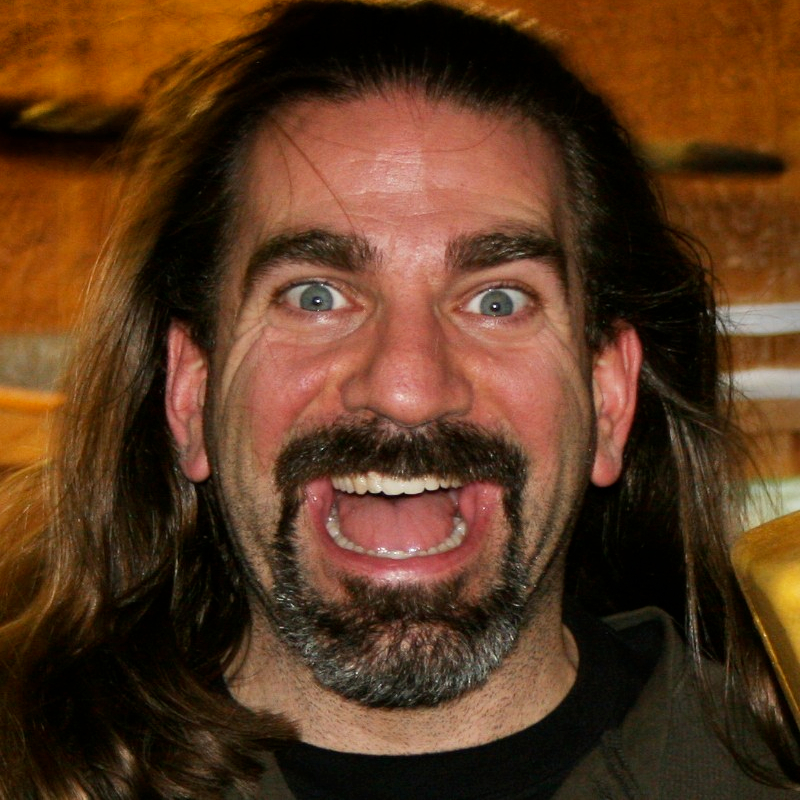
My name is Scott Le Duc. I have been a learner all of my life. I am an autodidact. So, I am in the right profession.
I am a National Board Certified educator currently work at Capital High School teaching International Baccalaureate (IB) and Career and Technical Education (CTE) classes focusing on arts and technology instruction, specifically music, film and game design. I have worked as an adjunct faculty at Lesley University, City University of Seattle, St. Martin’s University, and Wuhan University of Technology in Hubei Province, China.
Connections
- Capital High School Email: sleduc@osd.wednet.edu
- Personal Email: scottleduc@gmail.com
- Capital High School Staff Page
- YouTube (CHS)
- YouTube (Personal)
- Soundcloud (Music)
- Itch (Games)
- Diigo – Social Bookmarks
- GoodReads – Book List and Reviews
- Letterboxd – Film List and Reviews
Short Educational Biography
Scott has taught creative and technical arts for over 25 years. He supports students of all abilities develop their creative voice and agency in a co-authored classroom learning community that Brian Eno refers to as a ‘Scenius’ or collective genius. Scott helps students engage in songwriting and audio production while encouraging their learning of productive workflow. He is also a co-founder of the Washington State-based non-profit Advanced Media Entertainment Society (AMES) which helps build a community between high school students and professional storytellers in the media arts.
What I Do…
I help teachers and students develop contextual learning based on student agency. What? I help teachers and students focus on the end in mind. What? Think problem-based learning. What? Try this … ask yourself, ‘what problem(s) are we trying to solve?’ Start with that first, then build the learning experience. Lastly, students and teachers share power in developing and maintaining this learning experience. This is part of my process.
How I Do It…
I help teachers support students to develop their own creative arts voice and agency in a co-authored learning community or as Brian Eno refers to it, our Scenius or collective genius. We do this through film, music, and game design storytelling skill building through practicing effective collaboration and production techniques. Brain research-based teaching philosophies are embedded in project-based learning (PBL) with techniques like Understanding by Design (UBD), Universal Design for Learning (UDL), Total Quality Learning (TQL), Getting Things Done productivity (GTD), developing a personal/professional learning community (PLN), Scrum small teams management with Trello, arts integration, memory building and recall, learning through mind mapping, storyboarding and pitching ideas, creativity on demand by setting time limits to constrict options, and other relevant techniques. Could I find more acronyms? Yes, I could. Don’t encourage me!
Furthermore…
I showcase predominantly web-based tools and techniques for music creation, filmmaking, game development, student collaboration, workflow production, screencasting, podcasting, blogging, tagging and organizing online content, social bookmarking, and positive and professional online social network use. I support using media creation tools like YouTube, Soundtrap, Soundcloud, Construct, Unity, WordPress, Adobe Suite, Flickr, itch.io, and others.
My Why
- (WHY) Share stories to raise empathy and understanding
- (WHAT) Love is power, power is story, story is sharing, sharing builds community, understanding, and compassion
- (HOW) Learn effective story structures and use them frequently
M.K. Gandhi quotes I try to live by…
- “My life is my message.”
- “Faith is not something to grasp, it is a state to grow into.”
More Detail
Thanks for reading this! Some or all of the above information may be on the test!
 Scott Le Duc
Sitting in your WITEA presentation and thank you for it. I have been looking for examples of good presentations so this super helpful. Do you have a resource that has a bulleted boring slideset reformatted into a slideset folllowing the SUCCES criteria? Thank you much for your work!
I was at your presentations that do not suck session in Wenatchee at the WITEA conference in March. I love!!!! the who am I student example you showed and am going to have my AVID students do that lessson. Do you have a lesson plan or student examples you could share for that amazing project?
One Of the Best teachers I have ever had. Trust me this man is legit