Neil deGrasse Tyson on Education

  • 4:36 – We as a community have stigmatized learning to end the second you graduate
  • 8:50 – Students who get straight A’s do so despite the bad teachers, not for the good teachers.
  • 13:51 – Use a question your kid asks to teach them to figure it out for themselves
  • 18:19 – What Neil deGrasse Tyson would change within the public school system
  • 24:41 – Using the grading system to prevent certain students from opportunities
  • 30:24 – Looking at grades just shows attempts to impress people, not passion
  • 35:36 – Some other things matter, like ambition, for example.
  • 44:49 – It’s statistically tougher to be an NBA star than a medical professional

Thank you, TJ, for creating these notes!
Le Duc’s Teaching Methodologies and Strategies Notebook LM Generated Podcast

Learning Mastery generated from ChatGPT

Scott Le Duc’s teaching approach revolves around a meticulously structured Google sheet for session planning. This sheet incorporates SMART goals and visual tracking mechanisms to ensure student accountability. He leverages YouTube playlists as valuable learning resources and organizes role-based teams using Trello boards for seamless collaboration. Sessions alternate between theoretical and practical days, meticulously focusing on technical skill development. To maintain a balanced learning environment, Le Duc enforces mandatory requirements set by an advisory committee and employs a professionalism rubric that evaluates student behavior and attendance.
Le Duc’s Teaching Methodologies and Strategies

Le Duc’s Ultralearning Meets Kaizen: Supercharge Your Skills with AI as your Thought Partner

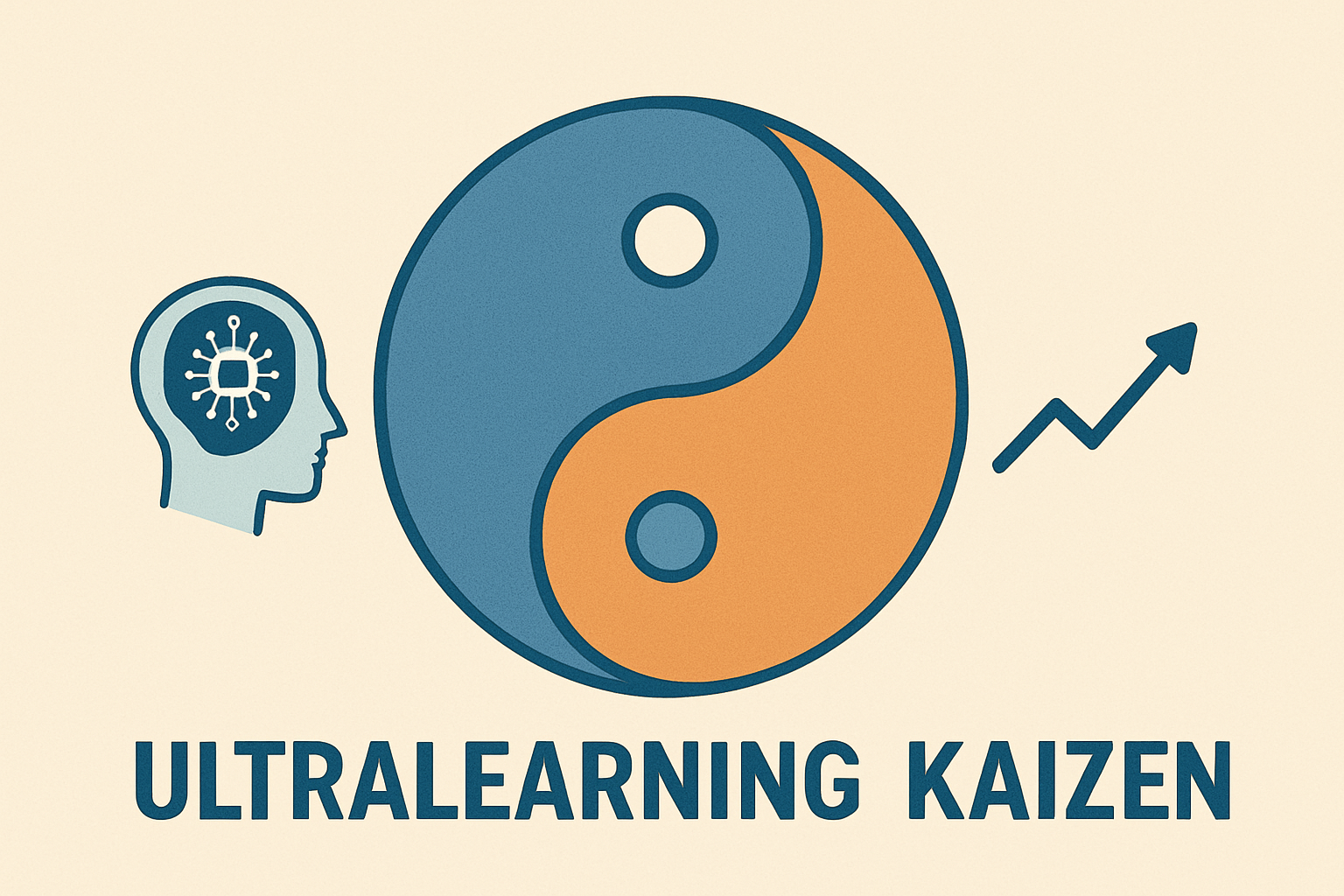
The image above was generated by ChatGPT.


Scott Le Duc presents a comprehensive blueprint for Career and Technical Education (CTE) success. This framework merges Scott Young’s Ultralearning approach for rapid skill acquisition with W. Edwards Deming’s Kaizen principles, emphasizing continuous improvement. The nine-step process includes Meta-Learning, Focus, Directedness, Drill, Retrieval, Feedback, Retention, Intuition, and Experimentation. The document also highlights the strategic use of Artificial Intelligence (AI) tools as powerful cognitive extensions, rather than substitutes for critical thinking, to support students and teachers throughout the learning journey.

The podcast below was generated by NotebookLM

AI and Ultralearning

Learn faster and more effectively with proven strategies. Discover how Scott Young earned a self-taught MIT computer science degree in one year, as revealed in his book Ultralearning. Explore practical applications, real-world examples, and insights from his experiences. Share success stories, lessons learned, and key pitfalls to avoid. 

“Learn a new talent, stay relevant, reinvent yourself, and adapt to whatever the workplace throws your way. Ultralearning offers nine principles to master hard skills quickly. This is the essential guide to future-proof your career and maximize your competitive advantage through self-education.” – Goodreads.com

Scott Young’s MIT Challenge Explained

Summary of Key Concepts

Prompt: Create a learning plan over 5 days with multiple sessions a day to learn the techniques in the videos from Your Guitar Academy’s How to Play Like Stevie Ray Vaughan series. To create a comprehensive 5-day learning plan based on the techniques presented in the provided video series, we will structure the plan to incorporate

  • Pareto Principle: Focus on the 20% of a topic that provides 80% of its practical application.
  • Study Schedules: Delegate the creation of study plans to AI, including time for revision and testing.
  • Resource Recommendations: AI curates tailored learning resources, including videos, books, and podcasts, based on different learning styles.
  • Project Ideas: AI provides project suggestions based on the learner’s skill level, such as beginner programming projects.
  • Clarification of Concepts: AI simplifies complex topics and helps create mental models or analogies.
  • Critical Thinking Development: Using the Socratic method, AI challenges users with open-ended questions to enhance their reasoning and logical thinking.

Scott Le Duc’s 2025 MIT Challenge

https://docs.google.com/spreadsheets

Scott Le Duc’s Ultralearning Blog Post Template

Scott Le Duc’s Student Session Blog Post Template

Scott Le Duc’s Resources for Presentation

Jeff Su’s Master the Perfect ChatGPT Prompt Formula (in just 8 minutes)!

Jeff Su’s Learn 80% of NotebookLM in Under 13 Minutes!

Pre-Session Poll Results

PROMPT: You are a professional presenter and educator. You are presenting at a CTE conference and presenting how to create an ultralearning curriculum for high school career and technical education students. The audience is career and tech teachers. Use the resources in this notebook to create a short bulleted list of material to answer the questions included below from the survey responses from conference session attendees. Here are the poll results…

  • Recognizing my own limitations with AI (using it like Google) and trying new approaches.
  • What is Ultralearning?
  • Student accountability when using AI. making sure they don’t use it to cheat.
  • I would like to get resources related to AI, the future of AI, and student career choices.
  • Using AI in a way that encourages learning.
  • Very interested in this session and see what you’ve put together!
  • Affective AI use policy

NotebookLM’s Results

• What is Ultralearning?

    ◦ Ultralearning is defined as a self-directed and intense strategy for acquiring skills and knowledge. It’s about empowering individuals to become self-reliant and take control of their learning journeys.

    ◦ The goal is to help individuals master hard skills quickly and gain a competitive advantage, ultimately increasing their earning potential.

    ◦ Developed by Scott Young, Ultralearning is built upon nine core principles: Meta-learning, Focus, Directness, Drill, Retrieval, Feedback, Retention, Intuition, and Experimentation1. These principles provide a systematic “playbook” for rapid skill acquisition.

• Using AI in a way that encourages learning & addressing limitations with AI (using it like Google) and trying new approaches. The challenge of moving beyond AI as just a search engine is precisely where its power for ultralearning comes in. Here’s how AI can be leveraged for active, deep learning:

    ◦ Focused Learning Plans (Pareto Principle): AI can help students apply the Pareto Principle, identifying the 20% of a topic that will yield 80% of the practical application. This allows students to create highly focused learning plans, ensuring efficient use of their study time.

    ◦ Personalized Study Schedules: Students can prompt AI to create detailed study schedules, specifying available days and hours, and including dedicated time for revision and testing. This offloads the organizational burden and promotes consistency.

    ◦ Curated Learning Resources: AI can suggest a variety of learning resources such as videos, books, podcasts, and interactive exercises, tailored to different learning styles (e.g., visual) or specific needs (e.g., free resources). This saves significant time in resource discovery.

    ◦ Project Idea Generation for Active Learning (Directness): AI can generate skill-level appropriate project ideas, encouraging students to learn by doing. For example, a beginner learning C# for game development could get project suggestions like creating simple video games in Unity. Projects force the application of learned concepts, which is crucial for the “Directness” principle of Ultralearning4.

    ◦ Clarification and Deep Understanding (Feynman Technique, Intuition):

        ▪ Students can ask AI to explain complex topics in the simplest terms possible, as if to a beginner or a five-year-old, akin to the Feynman Technique3…. This process of simplification helps internalize concepts and develop genuine understanding, fostering “Intuition”.

        ▪ AI can also create mental models or analogies to aid understanding and retention3.

        ▪ It can guide students through visualization exercises to help them internalize concepts and imagine real-life applications, making abstract ideas more concrete.

    ◦ Critical Thinking and Reasoning (Socratic Method): Students can engage AI as a “Socrat” to use the Socratic method. The AI will ask open-ended questions to challenge statements and provide constructive feedback on responses, thereby improving critical thinking, logic, and reasoning skills3. This directly aligns with the “Feedback” principle of Ultralearning.

• Student accountability when using AI & an Effective AI use policy. While the sources do not provide explicit policies, the Ultralearning framework, especially when augmented by AI as described, inherently promotes methods that foster genuine understanding and accountability, making it harder for students to simply “cheat” or avoid true learning:

    ◦ Focus on Application (Directness & Project-Based Learning): By emphasizing learning through hands-on projects and direct application of skills—as AI can help generate and refine—students are compelled to genuinely engage with the material. Success in a project cannot be easily faked if it requires practical output.

    ◦ Emphasis on Retrieval Practice: Ultralearning stresses actively recalling information from memory rather than constant reliance on notes or external sources. AI can be used to facilitate self-quizzing and retrieval exercises, challenging students to demonstrate knowledge independently.

    ◦ Feynman Technique for Understanding: When AI is used to facilitate the Feynman Technique, students are asked to explain concepts in their own simplified terms. This process immediately reveals gaps in understanding, ensuring that students aren’t just memorizing facts but truly comprehending them….

    ◦ Constructive Feedback: AI can provide immediate and constructive feedback on student explanations or answers, which is a core principle of Ultralearning…. This allows students to self-correct and deepen their learning without judgment, reducing the temptation to avoid challenging questions.

    ◦ Developing Intuition and Expertise: Ultralearning aims for deep intuition and mastery, where students can adapt and apply skills fluidly59. This level of understanding goes far beyond what simple AI-generated answers can provide and requires active, personal engagement over time.

• Resources related to AI, the future of AI, and student career choices. The provided sources primarily focus on how to use AI as a tool for accelerated learning of any skill, rather than providing specific resources about the future of AI itself or direct guidance on student career choices in relation to AI. However, the overarching message of Ultralearning is to equip individuals with the ability to quickly pick up in-demand skills to gain a competitive advantage and increase earning potential in a rapidly evolving world. This framework is, in itself, a crucial resource for navigating future career landscapes, regardless of the specific technologies involved.

How do AI tools enhance and align with the core principles of ultralearning methodologies?

Response from Google NotebookLM

AI tools, particularly ChatGPT, significantly enhance and align with the core principles of ultralearning methodologies by streamlining various aspects of the self-directed learning process.

Here’s how AI tools facilitate and support each ultralearning principle:

• Meta-learning (What, Why, How): The first rule of ultralearning, meta-learning, involves mapping out your learning journey by defining objectives, timing, and resources2…. AI helps immensely here by allowing you to tell it to create a focused learning plan using the Pareto Principle1. This means AI can identify 20% of a topic that will yield 80% of the practical application, making the “what to learn” much clearer and more efficient. Furthermore, AI can generate a study schedule, specifying when and for how long to study, including revision and testing times1. It can also suggest various learning resources like videos, books, podcasts, and interactive exercises, tailored to different learning styles or preferences (e.g., free vs. paid, visual resources)1, directly addressing the “how” of your learning strategy.

• Focus (Deep Work): Ultralearning emphasizes deep, concentrated effort to achieve higher quality and more efficient learning by minimizing distractions45. While AI doesn’t enforce focus directly, its ability to quickly generate structured learning plans and study schedules1 reduces the time and mental effort spent on planning, allowing you to dedicate more time and cognitive energy to the actual focused learning1.

• Directedness (Learning by Doing): This principle is about actively engaging in the process you want to master by learning through application and building projects45. AI directly supports this by helping you come up with project ideas appropriate for your skill level. For example, you can ask for beginner video game projects to strengthen C# coding skills, which forces you to apply what you’re learning.

• Drill (Addressing Bottlenecks): Drilling involves breaking down complex topics, identifying your weakest areas or “bottlenecks,” and intensely studying them to improve overall performance4…. When encountering hurdles or concepts that don’t make sense during a project, AI can be used to gain clarification. You can ask it to explain a topic in the simplest terms, as if to a beginner or a five-year-old, or to create mental models and analogies1. This helps in dissecting difficult areas and targeting them for improvement.

• Retrieval (Active Recall): Retrieval is a crucial strategy for cementing learned information into long-term memory by actively recalling it from memory, often through self-testing78. AI powerfully aligns with this through its capability to act as a Socrat. By instructing AI to “ask open-ended questions” about a statement you make and then “give constructive feedback” after your response, it continuously prompts you to retrieve and articulate your understanding, significantly strengthening your memory and critical thinking skills1…. The AI-generated study schedules also include time for revision and testing, further supporting retrieval practice1.

• Feedback (Constructive Criticism): Receiving frequent, constructive, and corrective feedback is vital for identifying areas for improvement that you might not see yourself…. As mentioned above, when engaging with AI using the Socratic method, it is specifically designed to provide constructive feedback to your responses. This direct and immediate feedback helps you refine your arguments, understanding, and logic without fear of judgment.

• Retention (Regular Practice): To avoid forgetting, ultralearning emphasizes regular practice and revisiting learned knowledge and skills9. AI assists with retention through the creation of study schedules that explicitly include time for revision. Additionally, by providing project ideas, AI encourages the repeated application of skills in different contexts, a highly effective method for retaining knowledge. Guiding visualization exercises to help internalize concepts and imagine applying them in real-life situations also aids in deeper understanding and retention.

• Intuition (Deep Understanding): Intuition in ultralearning refers to developing a “sixth sense” or deep expertise that goes beyond superficial recall, allowing for a true understanding of a topic. AI helps foster this by providing simplified explanations using methods like the Feynman technique (explaining as if to someone else), creating mental models or analogies, and guiding visualization exercises. These methods encourage a deeper internalization of concepts, making abstract ideas more concrete and relatable, which contributes to developing intuition….

• Experimentation (Trying New Approaches): As skill develops, ultralearners are encouraged to experiment with new approaches, refine their process, and find their unique style, which keeps learning engaging and at the cutting edge…. While not explicitly stated as “experimentation,” AI’s ability to suggest various learning resources that cater to different learning styles and come up with diverse project ideas provides a foundation for experimentation by offering multiple avenues and strategies for learning and application. This flexibility allows learners to explore different methods and approaches to find what works best for them.

In essence, AI tools like ChatGPT serve as a personalized, patient, and resourceful guide throughout the ultralearning journey, automating the more tedious aspects of planning and resource discovery, while also providing interactive methods for deep understanding, application, and self-assessment.

Post-session Survey

AI and The Disengaged Teen: Book Study

The material below was generated by Google’s NotebookLM. The material was an amalgamation of the resources in the resource summary section below. These resources were either referenced in the book or supported the discussions within the book, especially those related to the use of generative AI.

The Book

The Disengaged Teen: Helping Kids Learn Better, Feel Better, and Live Better by Jenny Anderson and Rebecca Winthrop

Resource Summaries

Here are brief summaries of the resources referenced in this discussion:

Excerpts from “The Disengaged Teen: Helping Kids Learn Better, Feel Better, and Live Better” with Rebecca Winthrop and Jenny Anderson (YouTube): Jenny Anderson and Rebecca Winthrop’s “The Disengaged Teen” addresses the teenage mental health crisis and empowers parents to foster engagement. They present four dynamic learning modes: Passenger, Achiever, Resistor, and Explorer, which are fluid reactions to environments, not fixed identities. The aim is to help teens build “exploration muscles”. Key strategies include autonomy-supportive parenting (fostering trust and choices) and nurturing the “curriculum of the home” (discussions, modeling learning), which is twice as predictive of success as socioeconomic status. Parents should nudge kids to make their own plans rather than nag, as it’s more effective. The book encourages playing the long game, focusing on well-being and long-term engagement over just grades.

Excerpts from “Jenny Anderson, Rebecca Winthrop, Ph.D, and Charles Duhigg – The Disengaged Teen” (YouTube): This source features Jenny Anderson and Rebecca Winthrop discussing the motivation behind their book, “The Disengaged Teen.” They share personal anecdotes that reveal how traditional metrics like grades can obscure true student engagement and motivation. The authors detail their extensive research, which identified the four modes of engagement (Passenger, Achiever, Resistor, Explorer). The conversation provides practical advice for parents and educators on navigating these modes, emphasizing the importance of autonomy, identifying student “sparks,” avoiding nagging, and promoting well-being over perfect outcomes.

Excerpts from “Educating Kids in the Age of A.I. | The Ezra Klein Show” with Rebecca Winthrop and Jenny Anderson (YouTube): This transcript details a conversation with Rebecca Winthrop, Director of the Center for Universal Education at the Brookings Institute, and co-author Jenny Anderson, discussing their book “The Disengaged Teen: Helping Kids Learn Better Feel Better and Live Better”. The discussion addresses the profound shift in education due to AI, the decline in reading among teens, and the need to rethink the purpose of education beyond job readiness. It introduces their “four modes of engagement” (Passenger, Achiever, Resistor, Explorer) and offers insights on how to foster engagement and prepare children for an uncertain future, emphasizing human relationships and critical thinking over rote learning.

Excerpts from “Assigning AI: Seven Ways of Using AI in Class” by Ethan Mollick (Substack): This source, written by an AI expert, explores how educators are already grappling with AI as both a threat and an opportunity. Mollick advocates embracing AI, even making it mandatory in his classes, and details seven ways AI can be used in classrooms: as a tutor, coach, mentor, teammate, tool, simulator, and student. He provides specific prompts and cautions about AI’s limitations, such as hallucination and bias, emphasizing the critical role of the teacher in guiding AI applications. The article particularly highlights AI as a coach (for metacognition) and as a tutor (for knowledge acquisition).

Excerpts from “Oxford Researchers Discovered How to Use AI To Learn Like A Genius” (YouTube): This video explains how Oxford University teaches its students to use AI for more effective and efficient learning, focusing on AI as a “trainer” rather than a “doer”. It highlights retrieval practice as the most effective form of learning and suggests using AI for Socratic questioning, generating multi-level explanations, creating practice questions, and aiding academic reading by challenging students to think critically. The video also points out the benefit of AI in reducing embarrassment for students asking questions.

Excerpts from “Use of generative AI tools to support learning | University of Oxford” (Official Website): This official guidance from Oxford University provides an overview of how generative AI tools (like ChatGPT) can ethically support academic skills while emphasizing that AI cannot replace human critical thinking. It outlines five key considerations, six tips for effective use (e.g., cross-checking accuracy, providing context, using personas), and specific ideas for leveraging AI in academic reading, writing, and general learning support. The guide reinforces the necessity of critical appraisal and proper attribution when using AI.

Excerpts from “Using AI to Implement Effective Teaching Strategies.pdf” by Dr. Ethan Mollick & Dr. Lilach Mollick: This paper provides practical guidance for educators on using AI to implement five evidence-based teaching strategies that are often time-consuming to execute manually. These strategies include providing varied examples and explanations, addressing student misconceptions, frequent low-stakes testing, assessing student learning, and distributed practice. The authors present specific prompts for Large Language Models (LLMs) and emphasize the critical role of instructor expertise in vetting AI output due to potential hallucinations and biases. They argue AI can act as a “force multiplier” for instructors.

I. Introduction: The Shifting Landscape of Education (5 minutes)

Today’s Focus: We’ll explore the insights from Anderson and Winthrop’s research and how AI can be a powerful ally in fostering student engagement, rather than merely serving as a tool for shortcutting learning.

II. Understanding Student Engagement: The Four Modes (15 minutes)

Introducing the Framework: Anderson and Winthrop’s research identified four fluid and dynamic modes of engagement that kids move in and out of constantly. These are not labels for children, but descriptions of their behavior in different learning contexts.

Passenger Mode

Description: Kids who are “coasting,” doing the bare minimum to get by, are often bored or overwhelmed, but may still get good grades. They are behaviorally present but emotionally/cognitively disengaged.

AI Connection: This is where AI poses a significant threat. Students in passenger mode might use AI to “shortcut the assignments,” such as having ChatGPT summarize readings or write essays, thus avoiding the actual learning process. This prevents them from developing critical thinking and writing skills.

Achiever Mode

Description: Kids striving for excellence, high effort, aiming for “gold stars” and perfect outcomes.

“Achiever Conundrum”: While seemingly ideal, this mode can lead to unhappy achiever syndrome, characterized by fragility, fear of failure, anxiety, and even depression, stemming from an insatiable pursuit of perfection. They may miss out on developing creativity and true self-awareness because they’re focused solely on external validation.

AI Connection: AI can perform many of the “excellent follower” tasks that Achievers are trained for. The skills Achievers focus on (following procedures, getting things “right”) are becoming automatable, making these skills incomplete for a world where critical thinking and initiative are paramount.

Resistor Mode

Description: Kids who are outwardly disengaged, acting out, withdrawing, or disrupting. They are often labeled “problem children” but are “children with problems”.

“Gumption”: Resistors actually possess strong agency, but it’s currently pointed away from learning. Their behavior often sends a clear message that “this isn’t working for me”.

AI Connection: While not directly addressed in sources for this mode, AI’s potential for personalized support and adaptive learning could help address the underlying issues (e.g., being overwhelmed or feeling a lack of belonging) that drive resistance, potentially offering a path to re-engagement.

Explorer Mode

Description: The desired mode is where kids are deeply engaged, curious, proactive, and intrinsically motivated. They actively pursue their interests and make meaning from their learning experiences. This leads to better achievement, mental health, and resilient learning skills.

“Spark”: Finding a child’s “spark” – a genuine interest or passion – is crucial, as this intrinsic drive spills over into other areas of learning and life.

Goal: The goal for all students is to cultivate this explorer mindset.

III. Leveraging AI to Foster Engagement and Learning (15 minutes)

AI as a “Force Multiplier” for Educators:

    ◦ AI can help teachers implement “challenging but well-proven pedagogical strategies” that are often too time-consuming.

    ◦ This is about AI supporting educators, not replacing them.

AI to Promote Personalized Learning & Deeper Understanding:

    ◦ AI as a Tutor/Coach: AI offers the potential for individualized support, adapting to a student’s unique learning style and pace without the embarrassment of asking questions in front of peers.

        ▪ Mollick’s View: AI can serve as an “AI-coach” to increase metacognition (e.g., reflection on team experiences). It can also be an “AI-tutor” that pushes students to generate their own answers through leading questions, which is key to learning.

        ▪ Winthrop/Anderson’s Caution: While promising, the concept of a universal AI tutor is “probably not yet” fully realized due to issues like hallucination and lack of human perceptiveness. Emphasize that “human instruction to oversee the process” is crucial.

    ◦ Retrieval Practice: Oxford University promotes AI for retrieval practice, a highly effective learning method. AI can facilitate Socratic questioning, provide multi-level explanations, and create practice questions to deepen understanding.

    ◦ Varying Examples & Explanations: AI can rapidly generate numerous and varied examples and multiple explanations of complex concepts, tailored to different student levels and learning styles. This helps students decontextualize ideas and build deeper mental maps.

AI to Spark Curiosity and Relevance:

    ◦ AI can act as a bridge between abstract school content and the real world.

    ◦ Encourage students (and parents) to use AI to explore the “why” and “how” of topics, making learning relevant (e.g., asking about real-world applications of quadratic equations).

AI for “Learning-to-Learn” Skills (Metacognition):

    ◦ AI can help students reflect on their learning journey, identify obstacles, and devise strategies for improvement.

    ◦ It can assist with organizing notes, enhancing language study, and developing coding skills.

The Evolving Role of the Teacher:

    ◦ AI will not replace teachers, but it “changes the job of the teacher quite substantially”.

    ◦ Teachers become managers, editors, supervisors, coaches, and fact-checkers. Their role shifts to orchestrating teaching and learning experiences, guiding students in their AI use, and providing human connection and mentorship. The teacher maintains the “hand on the steering wheel”.

IV. Rethinking Education for the AI Age (7 minutes)

The Purpose of Education Reimagined:

    ◦ In a world where AI can pass exams and write essays, we must fundamentally rethink the “purpose of education”.

    ◦ It’s less about transactional knowledge transmission and more about developing “flexible competencies,” self-knowledge, and the ability to navigate uncertainty.

    ◦ The “deal” of traditional education (grades = good job) is being “thrown into some chaos” by AI.

Prioritizing Human Skills & Relationships:

    ◦ AI should not lead to a “frictionless world” that prevents children from developing the “muscle of doing hard things” or essential human skills.

    ◦ Emphasis on human-to-human interaction, collaboration, empathy, and self-regulation that occurs in a classroom setting.

    ◦ The “screens and phones debacle” offers a crucial lesson: caution, intentionality, and avoiding FOMO (fear of missing out) when adopting new technology. AI products should be “designed for children” with appropriate guardrails.

Parents’ Role: The “Curriculum of the Home”:

    ◦ Parents have a “huge impact” on student engagement.

    ◦ Focus on discussions about learning content (not just grades), modeling the thrill of learning, and leaning into their child’s interests.

    ◦ Foster autonomy: Give kids space to make choices and take small, safe risks, rather than nagging. “Nagging doesn’t work” – it shuts down the problem-solving part of the brain.

    ◦ What parents do at home is “two times more predictive of learning and outcomes… than socioeconomic status”.

V. Conclusion & Q&A (3 minutes)

Key Takeaways: AI presents profound challenges and opportunities. Thoughtful integration, guided by educational expertise and a clear focus on human development, is essential.

Moving Forward “Together”: This is an unsettled but exciting time, where we get to decide the future of education by fostering experimentation and shared approaches.

“You have good kids,” and the strategies discussed can help unlock their motivation and prepare them for a future alongside AI.

Q&A…

Scott Le Duc’s Resources for Presentation

Jeff Su’s Master the Perfect ChatGPT Prompt Formula (in just 8 minutes)!

Jeff Su’s Learn 80% of NotebookLM in Under 13 Minutes!

Pre-Session Poll Results

PROMPT: You are a professional presenter and educator. You are presenting at a CTE conference and presenting material from the Book The Disengaged Teen. The audience is career and tech teachers. Use the resources in this notebook to create a short, bulleted list of material to answer the questions included below from the survey responses from conference session attendees. Here are the poll results…


How to assist students with research, independent work, and troubleshooting their AI-based projects.
how to encourage student engagement during class
How to get disengaged students in the game.
How can we can help students to become the Explorer and engage in epistemology
Define the disengagement!
How can we teach with the aid of AI responsibly?
Some strategies to reach some of my students

NotebookLM’s Results

Good evening, career and technical education teachers! I’m delighted to be here today to discuss key insights from “The Disengaged Teen” and how they can empower us in our vital work. Based on your survey responses, let’s dive into some practical strategies.

Here’s a breakdown of material relevant to your questions:

Define the disengagement!

    ◦ Disengagement is multifaceted, indicating when students are not motivated to dig in and learn.

    ◦ It encompasses behavioral engagement (showing up, participating, doing homework), emotional engagement (finding school interesting, exciting, feeling they belong), and cognitive engagement (applying learning, connecting ideas).

    ◦ Research has identified four modes of engagement:

        ▪ Passenger mode: Kids are physically present and often get good grades but are bored and doing the bare minimum. They’ve “dropped out of learning”3…. This can be because school is either too easy or too hard for them.

        ▪ Achiever mode: Students put in high effort to get good grades and gold stars, developing skills like goal orientation and persistence. However, they can tip into “unhappy achiever mode” where they strive for perfection, leading to fragility, high anxiety, and poor mental health outcomes4…. They often lack self-awareness about what they truly care about and miss opportunities to develop creativity and initiative.

        ▪ Resistor mode: These students are often seen as “problem children,” acting out, withdrawing, or disrupting. They may have high chronic absenteeism. While disengaged, they possess “chutzpah and gumption” and are signaling that “things aren’t working for them”….

        ▪ Explorer mode: The ideal state, where students are engaged across all fronts – behaviorally, emotionally, cognitively, and agentically (proactive and curious). They love what they’re learning and dig in, showing excitement and building resilient, independent learning skills…. Less than 4% of middle and high school students regularly experience this in school.

How to encourage student engagement during class & How to get disengaged students in the game.

    ◦ Shift students towards Explorer mode: The goal is to move students out of Passenger, Achiever, and Resistor modes.

    ◦ Cultivate autonomy and agency: Give students choices and a say in their learning. This means letting them make small decisions and experience the consequences, fostering self-driven learning…. For example, instead of nagging about homework, ask them their plan for getting it done and trust them to execute it.

    ◦ Identify and lean into their “spark”: Discover what genuinely interests and motivates your students, even if it’s not directly academic or “productive” in the traditional sense. When students find their spark, it creates an internal drive that spills over into other areas of their learning and life…. Schools in North Dakota, for instance, have used “studios” where students design their own classes around passions like creating an escape room based on historical events.

    ◦ Prioritize discussion and curiosity: Engage students in conversations about the content of what they’re learning, not just their performance…. Model your own curiosity and enthusiasm for learning.

    ◦ Address underlying issues for resistor students: Their resistance often stems from overwhelm, a lack of belonging, or mental health challenges. Understanding the “why” behind their behavior is crucial, and addressing these barriers can quickly help them re-engage, sometimes even more rapidly than students in other modes because they already possess strong agency….

    ◦ Rethink “Achiever” strategies: For students aiming for perfection, encourage small risks and emphasize well-being over constant striving for flawless outcomes. Help them understand that failing and bouncing back builds resilience – a crucial skill7….

How can we help students to become the Explorer and engage in epistemology?

    ◦ Becoming an Explorer means being proactive and curious about learning.

    ◦ Epistemology, or the nature of knowledge, is implicitly addressed by teaching students to critically evaluate information in an age where AI can “make stuff up”….

    ◦ Use AI to foster critical thinking, not just provide answers:

        ▪ Encourage students to generate their own answers: AI can be prompted to ask leading questions and push students to articulate their thinking, similar to a Socratic tutor….

        ▪ Compare student work with AI output: Students can summarize a text or generate examples, then compare their work to AI’s output to identify gaps in their understanding or critique AI’s accuracy.

        ▪ Fact-check AI: Explicitly teach students to cross-check AI-generated information against established, reliable sources….

    ◦ Model a love for learning: Share your own intellectual curiosities and how you explore new topics, including using AI.

How to assist students with research, independent work, and troubleshooting their AI-based projects.

    ◦ AI as a “force multiplier” for learning: AI can significantly extend student performance and understanding if used thoughtfully….

    ◦ AI as a Coach: AI can prompt students to reflect on experiences (e.g., team projects), encouraging metacognition. Students need instructions on how to interact with AI responsibly, understanding its limitations and taking charge of the process….

    ◦ AI as a Tutor: While a “universal AI tutor” is still developing, AI can help students understand concepts by explaining ideas, providing examples and analogies, and asking leading questions to help students generate their own answers…. Teachers can use AI as an in-class exercise to teach responsible use.

    ◦ Supporting Academic Tasks:

        ▪ Reading: AI can help generate lists of key terms, thought-provoking questions, or alternative explanations for complex topics. Students can summarize texts themselves and then compare with AI-generated summaries to improve critical reading….

        ▪ Writing: AI can provide feedback on grammar and structure, help overcome writer’s block, and suggest ideas for visuals. However, it cannot replace the development of these skills, and all AI outputs must be critically reviewed.

        ▪ Coding: AI can suggest ways to get started, recommend languages/environments, and help with functional code chunks. Students should still write and test their own code and verify AI suggestions.

    ◦ Troubleshooting AI-based projects: Students must be taught that AI “makes stuff up” (hallucinates) and that its outputs are “unpredictable” and “statistical”34…. This provides a learning opportunity for students to be in charge and critically evaluate the AI’s responses.

How can we teach with the aid of AI responsibly?

    ◦ Teacher’s pivotal role: AI should be a tool to augment teaching, not replace human instructors. Teachers remain critical for assessing AI output, tailoring its use, and guiding student learning….

    ◦ Ethical use and academic integrity: Teach students about plagiarism and the need for clear attribution when using AI tools. Unauthorized AI use can lead to academic penalties.

    ◦ Transparency and Critical Appraisal: Make it clear that AI is a statistical model, not a human. Teach students to always cross-check AI-generated outputs for accuracy against established sources….

    ◦ Context and Limitations: AI can generate errors, reflect biases, and draw on outdated data. Teach students to provide significant context in their prompts and to be aware of the AI’s limitations….

    ◦ Avoid “FOMO” (Fear Of Missing Out): Do not adopt AI just because it’s new. Use it when it solves a “real problem” in education, such as providing explanations or examples that are time-consuming for teachers to create manually….

    ◦ AI for Teachers: AI can be a “force multiplier” for educators, helping to implement evidence-based teaching strategies more easily. This includes generating multiple examples, varied explanations, low-stakes tests, assessing student learning, and distributed practice materials…. This frees up teacher time to focus more on students.

    ◦ Focus on uniquely human skills: In an AI-integrated world, the premium shifts to human capacities like critical thinking, creativity, communication, social-emotional skills, and interpersonal interaction. Education should prioritize these, rather than skills easily automated by AI….

    ◦ AI Literacy: Beyond just using AI, teach students how AI works, its risks, benefits, and the ethical considerations of incorporating it into their lives. This includes understanding its addictive potential and how companies incentivize its use.

Some strategies to reach some of my students.

    ◦ Tailored approaches: Recognize that students are in different modes of engagement (Passenger, Achiever, Resistor) and adjust your strategies accordingly.

    ◦ Nudging, not nagging: Avoid constant criticism or “nagging,” as research shows it can shut down the problem-solving part of a teenager’s brain. Instead, gently nudge them towards planning and responsibility….

    ◦ Model the thrill of learning: Share your own curiosities and how you learn new things. Curiosity is contagious.

    ◦ Empower through choice and ownership: Give students agency over their learning, letting them practice making choices. This helps them become self-driven learners, crucial for navigating an uncertain future….

    ◦ Connect learning to the real world: Show the relevance of academic concepts to students’ lives and the broader world. Use AI to bridge this gap by asking it to explain how abstract concepts apply in real-world contexts….

    ◦ Address mental health and belonging: Recognize that student disengagement can stem from mental health struggles or a lack of belonging. Schools should foster human-to-human socialization and provide support for emotional well-being….

    ◦ Utilize AI for differentiation: While not fully personalized, AI can help teachers differentiate instruction by generating varied examples, explanations, and practice questions tailored to different student levels and needs….

I hope this comprehensive overview provides valuable insights for your work with career and technical students. Thank you!

Post-session Survey