
Presentation Overview
These systems that influence education are like the river bank of the river. They define where the river will flow. If you want to change the river’s flow, change the river banks, don’t try to change the river. If you want to change education, use, improve, or change these systems.
Be a part of this holistic presentation explaining learning systems and how they help kids learn how to manage themselves, work through problems, activate resilience and creativity, and generally be prepared for adult life. This session is based on Dr. Yemi Stembridge’s work and those of other big thinkers in systems thinking.
Scott Le Duc’s Social Bookmarks at Diigo.com
Pre-session Survey
- Ask me a question with Google Forms
Post-session Survey
- Please fill in the What Works and What Doesn’t – Google Form
TPEP Bingo Card
- SIMPLE TPEP Bingo Card – Danielson (above) (PDF)
- DETAILED TPEP Bingo Card – Danielson (has the State 8) (PDF)
- Playing bingo with standards is a great way to activate the gaming mentality in students/teachers – get them looking, and searching in your curriculum – doing is learning!
Dr. Scott Galloway and Opportunity
CRE – DEI – SEL
Let’s explore some systems that have profound influence on student learning. Let’s also look for the potential of these three concepts in these systems.
CRE – Culturally Responsive Education
- Culturally responsive education (CRE) is an approach to schooling that promotes student engagement, learning, and achievement by centering their knowledge, cultural backgrounds, and everyday experiences in the classroom. – New America
DEI – Diversity, Equity and Inclusion
- DEI (sometimes referred to DE&I or IE&D) stands for diversity, equity and inclusion. As a discipline, DEI is any policy or set of initiatives designed to make people of various backgrounds feel welcome and ensure they have support to perform to the fullest of their abilities in the workplace. – Builtin.com
SEL – Social and Emotional Learning
- Social and Emotional Learning (SEL) is a process that helps people develop skills and attitudes to support healthy growth, manage emotions, and achieve goals. – We Are Teachers
Dr. Adeyemi Stembridge
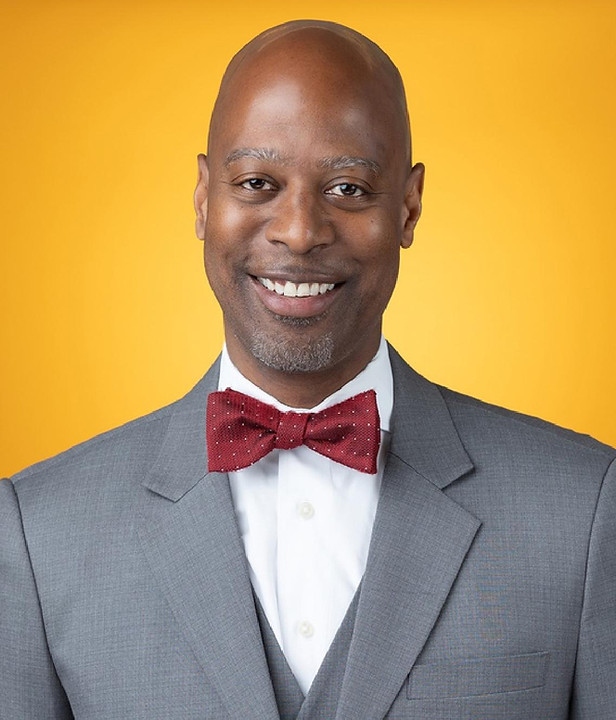
“Adeyemi Stembridge, PhD is an educational consultant specializing in equity-focused technical assistance. He is a coach and thought-partner to teachers and administrators with a particular interest in the design of culturally responsive systems and learning experiences for students.” – dryemis.com/about
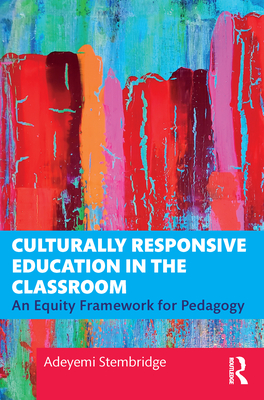
This exciting book helps educators translate the concept of equity into the context of pedagogy in the K-12 classroom. Providing a practice-oriented framework for understanding what equity entails for both teachers and learners, this book clarifies the theoretical context for equity and shares rich teaching strategies across a range of content areas and age groups. – Goodreads.com
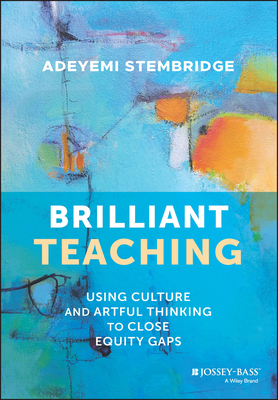
Think like an artist and design a classroom that works―well―for everyone In Brilliant Teaching , you will come to understand that equity―when we view it from an informed, multi-layered, and artistic perspective―is the essential purpose of teaching. As education thought leader Dr. Adeyemi Stembridge argues, true equity does not need to defend or justify itself against detractors. Teaching for equity means creating student-centered opportunities that match the social, political, and economic context of the learning environment. – Goodreads.com
Equality and Equity Definitions
- Equality is measured at the beginning and equity is measured at the end
- Equity is not a zero-sum game. Every child can learn and achieve. There is an opportunity for all
- If you want to see an expert in equity look at a parent of at least two children
- Equity is an action construct, we are continually working on it
- Equity is tied to pedagogy
- Understand our own concepts, especially related to learning
- Concepts have bias
- Creating enduring understandings
- Use cultural strengths to support learning
TQL – Total Quality Learning
“David P. Langford, senior education facilitator and Advisory Board member for The Deming Institute and CEO of Langford International, Inc., will set the stage for understanding the foundation of the Deming approach applied in education. He will explain the methodology and show documentation of how Deming theory is affecting all levels of learning worldwide. Working directly with Dr. Deming before he died in 1993, Mr. Langford developed a powerful understanding of how to put into action processes that are inspiring innovative and visionary world-class learning in classrooms, schools, districts, and universities.” – YouTube
“Why are we here? – Have fun, learn something, and make a difference.” – Dr. Deming
SCOTT’S RESOURCES
TAKE AWAYS?
HABITS AND RITUALS
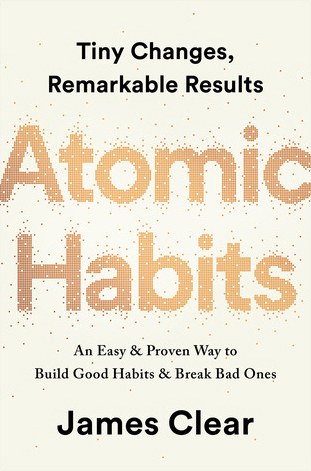
“No matter your goals, Atomic Habits offers a proven framework for improving—every day. James Clear, one of the world’s leading experts on habit formation, reveals practical strategies that will teach you exactly how to form good habits, break bad ones, and master the tiny behaviors that lead to remarkable results.” – Goodreads.com
- People are patterns; systems of habits and rituals
OVERVIEW
SCOTT’S RESOURCES
Atomic Habits Handout Resources
- Read How to Create a Good Habit and fill in the Implementation Intention Template with your own habit intention from James Clear’s Atomic Habits
- Read Habit Stacking and fill in the Template with your own habit stack from James Clear’s Atomic Habits
- Read Chapter 3: How to Build Better Habit in 4 Simple Steps from James Clear’s Atomic Habits
- Read Chapter 2: How Habit Shapes Your Identity from James Clear’s Atomic Habits
TAKE AWAYS?
ANXIOUS GENERATION
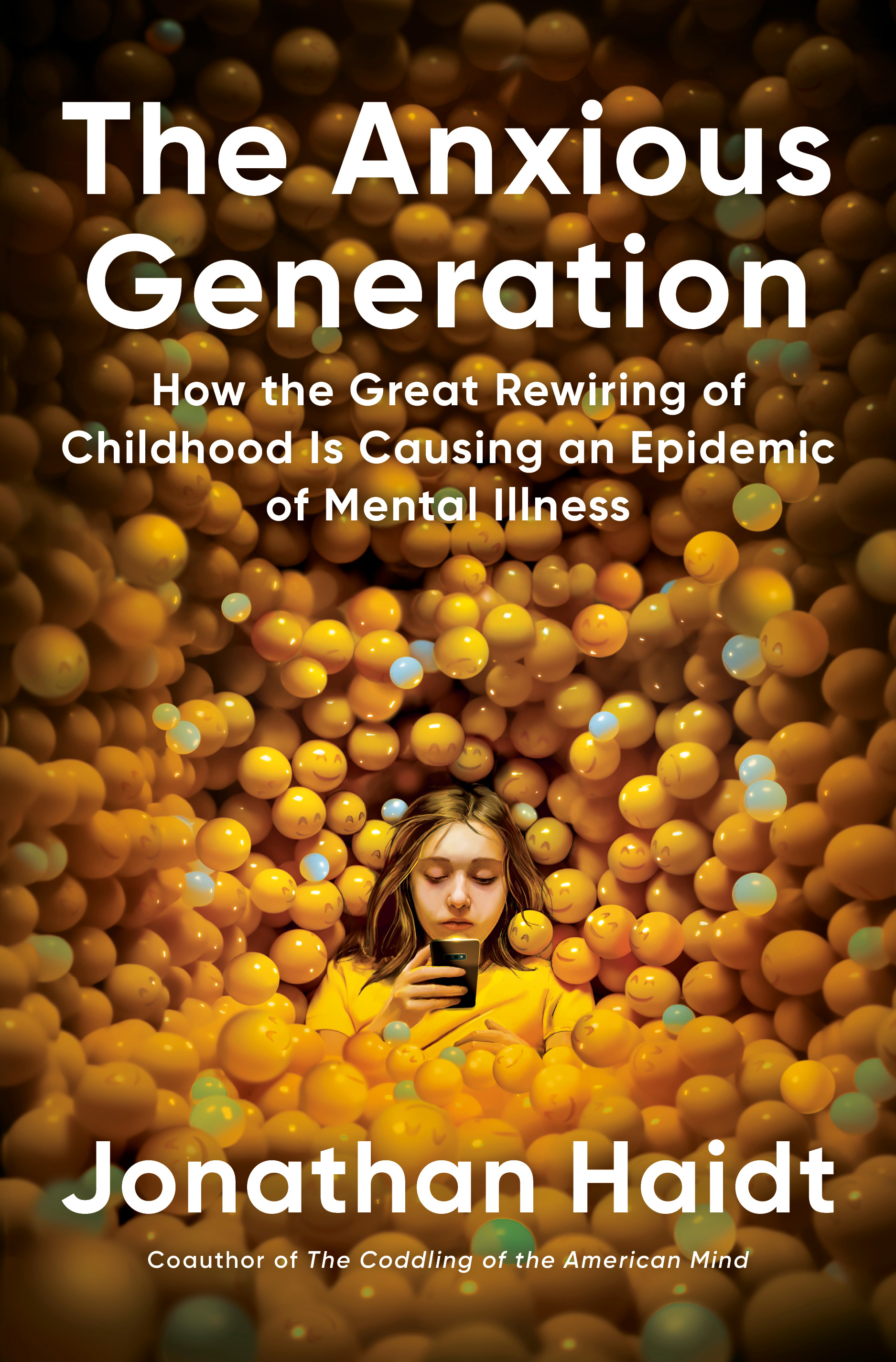
“After more than a decade of stability or improvement, the mental health of adolescents plunged in the early 2010s. Rates of depression, anxiety, self-harm, and suicide rose sharply, more than doubling on many measures. Why?” – Goodreads.com
OVERVIEW
TAKE AWAYS?
GTD – Getting Things Done

“In Getting Things Done Allen shows how to:
* Apply the “do it, delegate it, defer it, drop it” rule to get your in-box to empty
* Reassess goals and stay focused in changing situations
* Plan projects as well as get them unstuck
* Overcome feelings of confusion, anxiety, and being overwhelmed
* Feel fine about what you’re not doing”
SCOTT’S RESOURCES
- Learn goal setting, self-control, self-directions, focus, planning, and strategies for getting things done.
- Most students are bad at setting goals
- Most students are bad managers of time
- Most students procrastinate
- Most students are easily distracted
- Students need to learn the art and science of getting things done (GTD) to help lower anxiety and increase productivity, confidence, mindfulness, and happiness
How?
- Pick a tool like Google tools like Keep, Trello, Workflowy, paper-based notebook, or other system you can personalize
- Watch the videos in the resources section at the top of this web page
- Using Google Keep in your Getting Things Done workflow (YouTube)
The 5 steps of the GTD method
- Collect tasks, projects, and ideas,
- Process ideas to set up actions,
- Organize tasks into measurable action plans,
- Keep track and adjust,
- Complete tasks.
GTD Flowchart

TAKE AWAYS?
MASTERY
“In this book, Robert Greene demonstrates that the ultimate form of power is mastery itself. By analyzing the lives of such past masters as Charles Darwin, Benjamin Franklin, Albert Einstein, and Leonard da Vinci, as well as by interviewing nine contemporary masters, including tech guru Paul Graham and animal rights advocate Temple Grandin, Greene debunks our culture’s many myths about genius and distills the wisdom of the ages to reveal the secret to greatness. With this seminal text as a guide, readers will learn how to unlock the passion within and become masters.” – Goodreads.com
SUMMARY
TAKE AWAYS?
ULTRALEARNING

“Learn a new talent, stay relevant, reinvent yourself, and adapt to whatever the workplace throws your way. Ultralearning offers nine principles to master hard skills quickly. This is the essential guide to future-proof your career and maximize your competitive advantage through self-education.” – Goodreads.com
Scott Young’s MIT Challenge
TAKE AWAYS?
PBL – Project-based Learning

“Project-based learning is a dynamic classroom approach in which students actively explore real-world problems and challenges and acquire transferable knowledge.” – Edutopia
SCOTT’S RESOURCES
TAKE AWAYS?
LEAN – Project Management Strategies (Agile, Scrum, Kanban, etc.)
“In the future, historians may look back on human progress and draw a sharp line designating “before Scrum” and “after Scrum.” Scrum is that ground-breaking. It already drives most of the world’s top technology companies. And now it’s starting to spread to every domain where leaders wrestle with complex projects.” – Goodreads.com
SCOTT’S RESOURCES
- Scrum Slideshow
- Building Successful Teams Resources
- Fibonacci Cards
- Beginner’s Guide to Scrum and Trello
- Trello and Scrum Tutorial
- Burndown Chart (PDF)
- Trello Film Class Template (Le Duc at Trello)
- Trello Power-ups
- Zapier automation task lists and resources to Trello Board
- Scott’s zaps (Behind login)
- Scott”s Google sheets that feed the Zap and creates the cards in Trello
- Getting started with Zapier and Trello
- Zapier and Trello Integation information
- Connecting Zapier to Trello
- Zapier Power-up for Trello
- Scott’s Modified version of Game Design Postmortem and Retrospective Team Forms (Google Doc)
- Film Teams (PDF)
- Film Team Presentation Form (PDF)
- Task Time Team Form (PDF)
- Professional Quotient Form v.4 (Google Doc)
TAKE AWAYS?
UBD – Understanding by Design
“What is understanding and how does it differ from knowledge? How can we determine the big ideas worth understanding? Why is understanding an important teaching goal, and how do we know when students have attained it? How can we create a rigorous and engaging curriculum that focuses on understanding and leads to improved student performance in today’s high-stakes, standards-based environment?” – Goodreads.com
SCOTT’S RESOURCES
- Scott’s UBD Lesson Plan Outline
- Scott’s Über Lesson Builder
TAKE AWAYS?
UDL – Universal Design for Learning
By incorporating the Universal Design for Learning (UDL) principles of Engagement, Representation, and Action and Expression into a curriculum, we take the first step in unlocking every student’s potential by giving every student the opportunity to build knowledge. The principles for UDL detail specific approaches to support students who might need learning accommodations. A curriculum that incorporates the UDL approach to teaching provides all students with an opportunity to succeed by proactively removing learning barriers. – GreatMinds.org
ANOTHER DEFINITION
“Universal Design for Learning (UDL) is a teaching approach that aims to create flexible learning environments that meet the needs of all students. UDL is based on the idea that there is no “typical” student and that all students have different strengths and assets. The goal of UDL is to remove barriers to learning and help students become expert learners by engaging them in a variety of ways. ” – Google AI
TAKE AWAYS?
 Scott Le Duc