“LTHE : Learn – Teach – Help – Enjoy / FOSS ” by tatadbb is licensed under CC BY-SA 2.0 .
Pre-session Survey
Ask me a question with Google Forms
What would you like to learn from this workshop?
TPEP (Danielson format) Survey (Optional)
Post-session Survey
Introduction
Importance of Frequent, Quality Formative Assessment
Happiness
TPEP Documents for This Workshop
Warm Up
Objective of Workshop
Share ideas to connect with and engage students in learningLearn strategies to co-author the learning experience with studentsBe like water. – Bruce Lee
Introduction
Why We Do What We Do
Andragogy
Zooming In and Out in a Web Browser
Type COMMAND (Mac) and “+” to zoom in and “-” to zoom out
Type CONTROL (Win) and “+” to zoom in and “-” to zoom out
Feedback is Important
The more frequent the feedback the quicker, and better the improvement
But What to Give Feedback?
Need to establish the core of what we hope the learner to learn
How do we get students to care? To be engaged? How do we move from apathy to passion?These questions have many answers, but to affect real, lasting change structural and philosophical changes need to be made in the classroom. Two approaches:
Examine The Tree of Life exercise to get a better understanding of who we are and where we are in our Scenius
Examine structures in our lives that empower and impede us
Ideas are detailed below in the embedded videos and notes taken at the Deming Institute in Seattle in November of 2015.
Tree of Life
Tree of Life for the really disconnected student
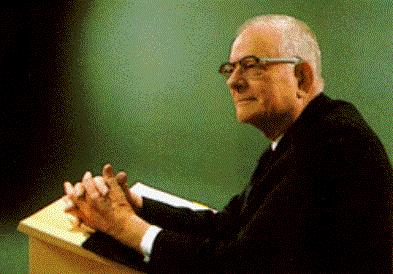
Deming on Grades and Performance
Image from Wikipedia
Deming explains ranking and grades
Notes from The Deming Institute
Scott Le Duc at Deming Institute at CedarBrook Lodge in 2015 David P. Langford , senior education facilitator and Advisory Board member for The Deming Institute and CEO of Langford International, Inc , set the stage for understanding the foundation of the Deming approach applied in education. He explained the methodology and showed documentation of how Deming theory is affecting all levels of learning worldwide.
Working directly with Dr. Deming before he died in 1993, Mr. Langford developed a powerful understanding of how to put into action processes that inspire innovative and visionary world-class learning in classrooms, schools, districts, and universities.
The notes below were taken by Scott Le Duc at the conference.
Mr. Le Duc also posted images and comments on Twitter ( or X ) #Deming2015
Cedarbrook Lodge, Seattle Nov. 6-8 VIDEO
Resources
Day 1
8:15 – Early Morning Session
Kevin Cahill
Deming’s grandson
Common Sense
Decisions were made on common sense
Need to look at problems differently
Videos
David Langford – Why Deming in Education
0:13 Video of Mt. Edgecumbe High School 11:05 Deming’s 3 principles he always started with
Have fun
Learning something
Make a difference
13:00 Quality is about the transformation of the individual
Don’t just get rid of the bad ones
He told the story of his school
When you get a hammer, everything looks like a nail
Attended Deming seminars
Deming: People have a right to joy in their work
Students have a right to joy in their learning
Deming: Move from extrinsic motivations to intrinsic
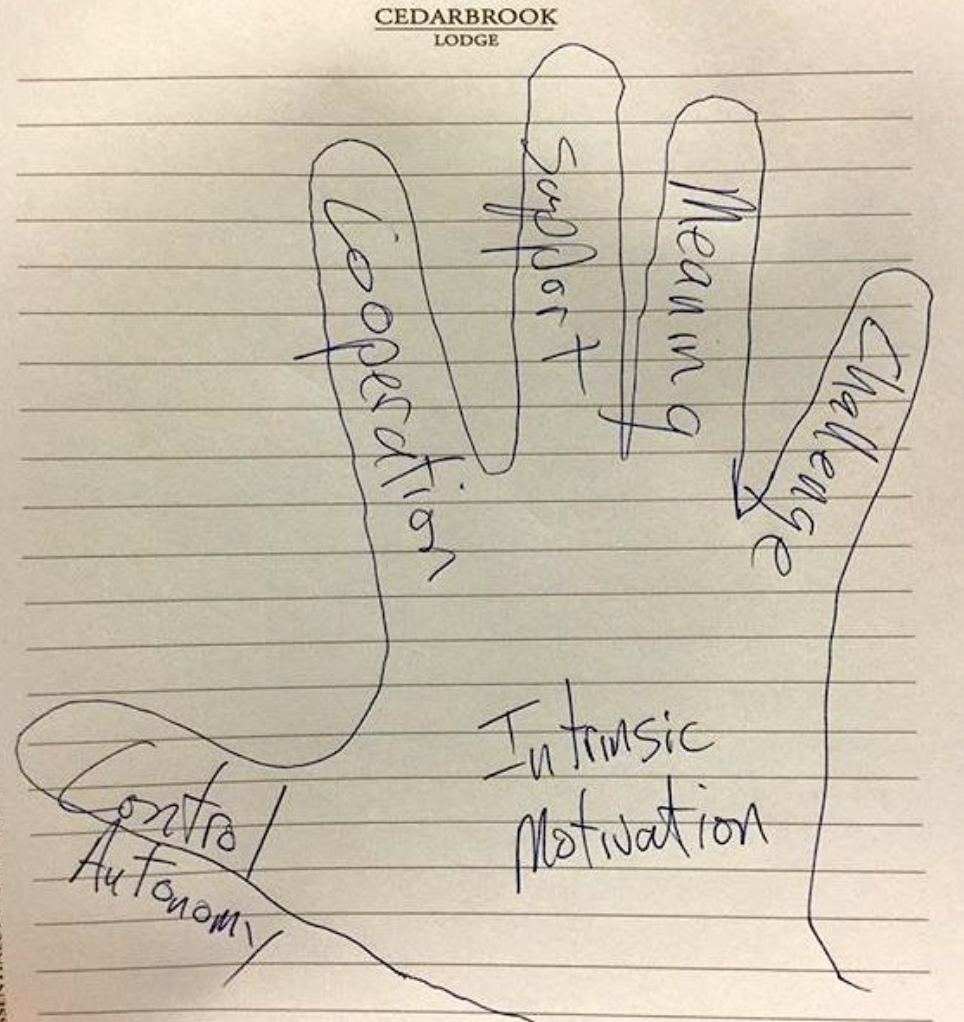
25:58 EXERCISE: Trace hand on a piece of paper
One needs to have profound knowledge before they make real change
27:40 System
What system are we working within?
Do they empower or neutralize power?
Seldom do we ask what is wrong with this system that is producing poor results? – Change it!
In the name of trying to make things better, often make it worse – don’t create games for kids to play in a system
28:57 Theory
What is your theory of education?
Many people don’t have a clear theory
Many theories are based on unfounded ideas
“Bonus” thinking narrows: What do I need to do to get an “A”?
Dr. Deming said most people don’t know what their job is
STORY: Tardy Czar at Texas high school
STORY: Where do we get numbers for tardies, consequences, etc. – Deming answered: séances (Joke: Langford called them board meetings)
What is the grading scale based upon? Is it a game? Play the game or else
Langford’s son’s rationale that he could go skiing 9 times during a semester
37:40 Variation
What does data-driven mean?
What is the data telling you?
What are going to do with it?
Where is it coming from?
Do we understand the variability within the data?
What’s the average performance?
JOKE: Many teachers have taken a vow of statistical abstinence
JOKE: Teacher says, ‘I don’t do numbers.”
39:32 Psychology
Do we really understand the psychological effects of our policies?
Tardy policies – 3 absences allowed – why?
Why are we learning this?
If we say to pass the test, it’s not learning, it’s the game of school
Fundamental attribution error
attributing a fault or defect to the individual without first understanding what is going on systemically
Easy to blame the students for being unmotivated and failure
There really isn’t extrinsic motivation, it’s extrinsic activation
An individual can be activated if the punishment or reward is strong enough
As soon as the activation is taken away the behavior goes right back to where it was before
Humans are born with about 100 billion neurons
The brain will only make neural connections for survival
Cramming for the test is short-term survival
44:22 Brain Research
Neural Science and Deming video (4:25) – JW WilsonJW Wilson presents activating the learning code in the video toward the bottom of this blog postWhere are the students going after they leave school?
We want students who will add value to society
When Langford started at Mt. Edgecombe only 2% of students who graduated finished college
When he left the school they were up to 60% and recently he said they were to 80%
Developing student capacity to be successful is the goal
Some universities have freshmen dropout rates as high as 60-70%
Students don’t know how to think, plan, change situations, or adapt to the current situation
Sample Hand at Instagram
I drew mine backward, systems should be on the thumb
50:26 EXERCISE: Trace the other hand
How do you change extrinsic motivation into intrinsic motivation so people want to do the work?
51:15 Naval Academy story – because it will be on the test53:59 EXERCISE: Try to move the person next to you with one finger
Doesn’t work
Take all fingers and make a fist
Now you can make someone move
This is what happens in systems
If you change only one thing (one finger) it’s hard to make a change, but with all parts (fist) you can make a change
55:34 Control / Autonomy
Teachers can be control freaks
Langford was a band teacher
Drive out fear
No public humiliation
Fear is an extrinsic motivation
Most asked questions: All student questions come to
What are we doing?
How are we doing it?
Why are we doing this?
The Deming way is to think, how can I run the class so kids don’t have to ask these questions
Ungrateful (Students/Teachers) Syndrome
Stop planning FOR people and start planning WITH them
Takes, at a minimum, 19 days to break a neural network pattern, habit
Whole lot more fun to plan WITH people, not FOR them
Shift the workload to everyone, not just you
1:03:36 Cooperation
Ask the question: Do we need other people to get results?
We need other people to get results
Cooperation is built into the human genome
If you want to see people get much more intrinsically motivated, change the cooperation level
QUESTION: Do you actually need other people to reach your result?
Traditionally in education, we isolate students
Deming said if you want to achieve at a much higher level, teach people to cooperate at a much higher level
Took Michael Jordan 5 to 6 years to realize that he was on a team
Mt. Edgecombe did integrated projects across departments that had long-term results
Robot basketball doubled student interest in the program, STEM before STEM
Early Internet messaging to help each other
Special needs students learned to advocate for themselves and ask for help
1:09:39 Support
STORY: Employee of the Month story
Don’t have student/employee of the month
Outcome: 1 winner and 999 losers
Help kids master work
Support attends/failure
Otherwise, students give up
Want them to try and be rewarded for trying by helping to get better
QUESTION: Do we have some method for communicating how students are doing?
5 – 10% of kids getting good grades are the ones motivated by grades
90% it is not a motivator
Kids de-motivate by saying, ‘What do I need to do to get a “C”
They may love sports/music/arts and want to work in their gifted area to get grades so they can keep doing what they love
Stop working with words like DEADLINES – has the word DEAD in it
Turn deadlines into TARGET DATES
What happens if you don’t meet the target date – YOU GET… HELP! 🙂
Understand the neural science – time is the only variable to success
1:17:19 Meaning
Is it meaningful?
If it’s not meaningful, people don’t care
If you understand the student’s MEANING NETWORK, you can tie a lot to it
EXAMPLE: 4 ft 9-inch passionate basketball player – can tie statistics and other sophisticated math
Why are we doing this / learning this?
EXAMPLE: Naval Academy cheating scandal
What would cause 165 students to cheat?
Not defective people, it’s a defective system
Students ranked 1 to 1000
Rank results in the quality of the post-school assignment
EXAMPLE: Retirement center writing project each year
High level of meaning for the community, people, and students
Need to connect with student interests for them to find meaning
1:21:44 Challenge
Is the work challenging?
Set too high or low and it demotivates
The teacher should be teaching students how manage their own pace and challenge as they go
It’s the student’s challenge to meet the target date
It’s the student’s challenge to meet the high level of standards
The student is going through that
Teach students to use Gantt charts , flow charts , and other processes and ways to manage the workload, portfolio assessments, etc.
The teacher is going to help the student manage this
The whole time students are in a highly cooperative environment, too for more support
AND the student is going to have control over the process
Sample Hand at Flickr
VIDEO: Deming talking about motivation VIDEO: Key & Peele – TeachingCenter
Break 10:10 – 15 10:25 – Late Morning Session
Jane Kovacs and Michael King
Lunch 11:45 – 1:00 1:00 Early Afternoon
Bone Diagram introduced
Christine Simpson (Middle School) and Sarah Ambrus (High School) from Leander SD Austin, TX
Jake Rodgers and Phyllis Tubbs
Principal at Gold Bar Elementary
Jake shared his love of data charts
Break 3:15-3:30 3:30 – Late Afternoon
Day 2
8:30 Early Morning Session
Break 10:20 10:35 – Late Morning Session
JW Wilson – Executive Director, Advanced Learning Institute
Building a Quality CTE System (HINT: Focus on Verbs!)
Identify Standards
Group Concepts
Batch together complementary skills
Build Units by Verbs
Sort by verbs
Separate thinking and doing into different units
Thinking = Knowledge
Doing = Understanding
Diet example
Knowing I should eat healthy demonstrate knowledge
Actually eating healthy demonstrates understanding
Digital Design CSS units example
Dive deeper with Bloom’s Verbs
Sequence Units
What skills sequence well for building a diverse skill base for problem-solving and creating?
Decide on Outcomes
Thinking / Knowledge
Quiz or Test
Observation
Checklist and notetaking
I use a printout of students’ pictures and write under their image
Conversation
Check for terms usage and further concept understanding
Presentation
Doing / Understanding
Establish Quality – Skills Checklists
Establish Quality – Rubrics
DoDEA 21st Century Leadership Skills
Self-regulation Rubric (CHS Site)Self-regulation Rubric Google Form for students to self-assessPick the math, reading, writing, art, science, and other skills to be integrated strategically with the help of the content-specific instructors
I believe that CTE programs should have the help of math, science, art, English, and other content experts to help integrate these specific skills
Bribe them with food, chocolate, yummy drinks, etc.
Once skills have been selected use Bloom’s verbs to build rubrics
Examine verbs in the frameworks
Have students help build rubrics with Google Forms with the verbs
Apply Quality
Decide what rubrics to use for each unit
Be careful to only assess the quality that is directly related to your standards
Less is more
Construct Project Feedback Process
Scott uses feedback forms
Establish Portfolios
Projects to help Engage Students



 Scott explains the Tree of Life for the really disconnected student





 Jim Flatmo and Scott Le Duc started using the Unity game engine and newly minted curriculum from Unity last year. In this roundtable they share their experiences. Game design teachers or anyone interested in starting a game design program are invited to be a part of the conversation.
 Jim Flatmo
 Scott Le Duc

